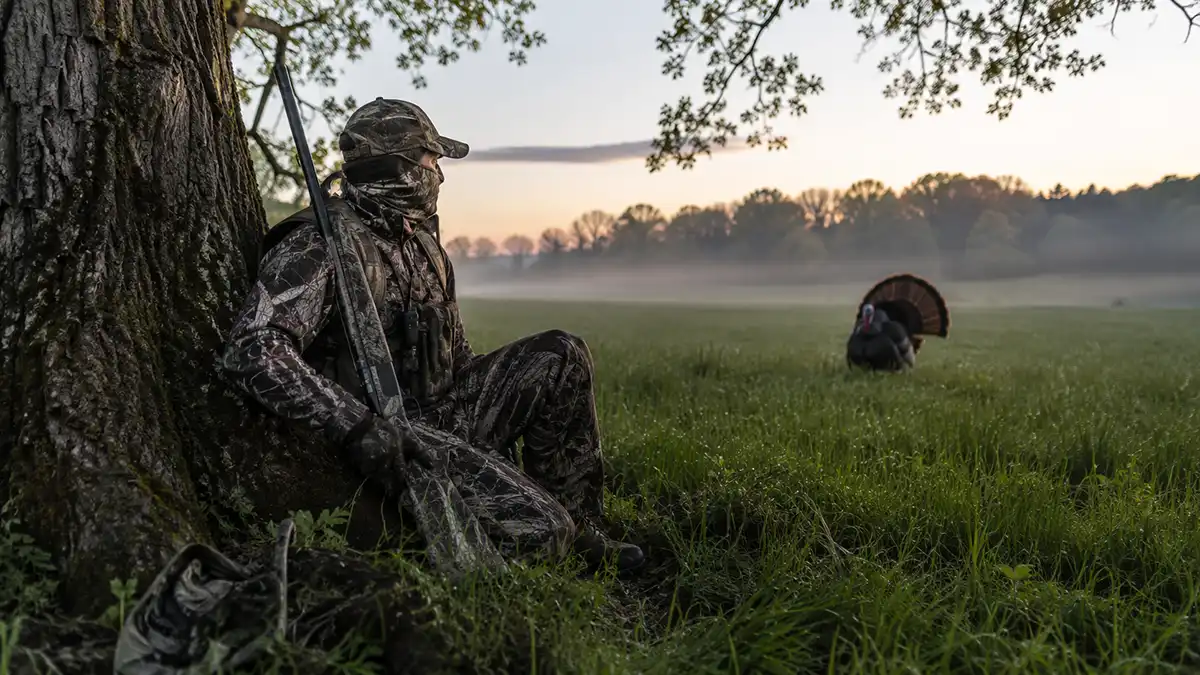
When the dogwoods bloom and the first gobble rolls across a Kentucky ridge at dawn, turkey hunters know their season has arrived. Spring gobbler hunting is one of the most exciting pursuits in the outdoors — a chess match with a wary bird that you call into range using its own language. Kentucky has a healthy population of eastern wild turkeys and plenty of public and private land to chase them. Here's how to get started.
Scout Before the Season
Success in the spring woods is built in the weeks beforehand. Get out early to locate birds: listen at dawn for gobbling on the roost, look for scratching in the leaves, dusting bowls, tracks, and droppings, and glass fields where toms strut in the morning. Knowing where turkeys roost and where they like to travel and feed lets you set up in the right spot before daylight — the single biggest key to killing a gobbler.
Calling Turkeys
Calling is the heart of turkey hunting. The basic sounds — the plain yelp, cluck, purr, and cutt — imitate a hen and can pull a lovesick tom right to your gun. Box calls and slate (pot) calls are the easiest for beginners to learn and sound great, while diaphragm mouth calls keep your hands free for when a bird gets close. You don't need to be a champion caller; realistic, well-timed soft calling often beats loud, constant calling. Learn to read a gobbler's mood and know when to call and when to shut up.
Gear and Setup
Turkey hunting gear is simple but specialized. A shotgun (commonly a 12 or 20 gauge) loaded with dedicated turkey loads and patterned ahead of time is standard; pattern your gun at various ranges so you know your effective distance. Full camouflage matters, because a turkey's eyesight is extraordinary — cover your hands and face and stay still. Many hunters use a decoy or two to draw a tom's attention, and a comfortable seat against a wide tree keeps you patient and hidden. Set up with a good backstop, break up your outline, and let the bird come.
Safety First
Turkey hunting demands extra safety discipline because you're using a shotgun, wearing full camo, and imitating a turkey — sometimes near other hunters. Never stalk a gobbling bird; call it to you instead. Positively identify your target and be certain of a legal bearded bird before you raise your gun, and never shoot at sound or movement. Avoid wearing red, white, blue, or black, the colors of a gobbler's head, and consider wearing hunter orange while walking to and from your setup. Sit against a tree wider than your shoulders for protection.
Seasons and Regulations
Kentucky offers a spring turkey season, typically in April, along with a special youth-only weekend that's perfect for introducing a young hunter. Bag limits generally restrict harvest to bearded birds, and dates and limits change from year to year. Always confirm the current season dates, bag limits, and license and permit requirements with the Kentucky Department of Fish & Wildlife Resources before you hunt.
There's nothing quite like a spring morning in the turkey woods, working a gobbling tom as the world wakes up around you. Scout hard, call smart, hunt safe, and Kentucky's spring gobblers will give you memories that last a lifetime.