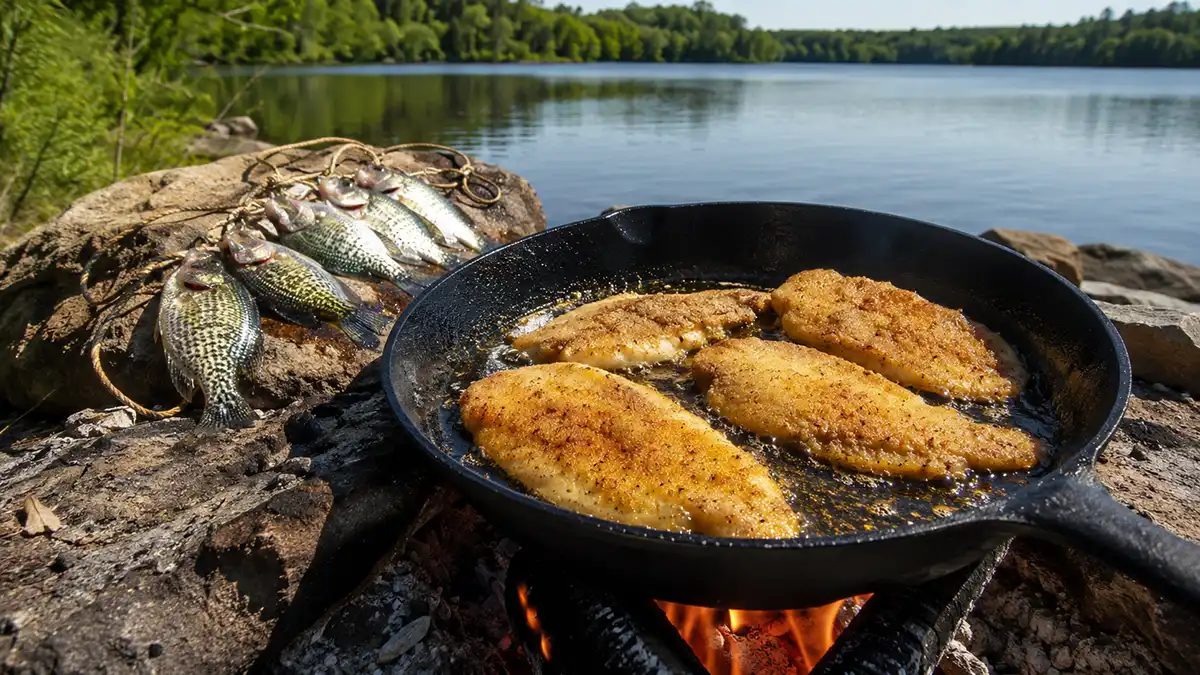
Ask any Kentucky angler about their favorite meal and you'll hear the same thing: nothing beats fish you caught that very morning, cleaned and fried right by the water. The "shore lunch" is a tradition as old as fishing itself, and it turns a good day on a Kentucky lake into a great one. Here's how to do it right, from keeping your catch fresh to plating a crispy, golden meal.
Start With a Legal, Fresh Catch
A great shore lunch begins before you ever light the fire. Keep only fish that meet Kentucky's size and creel limits — check the current regulations from the Kentucky Department of Fish & Wildlife Resources, since limits vary by species and water. Crappie, bluegill, and bass are shore-lunch favorites for good reason: they're abundant and they fry up beautifully. Dispatch fish quickly and humanely, and keep them cold on ice in a cooler until you're ready to cook. Fresh fish, kept cold, is the single biggest factor in how good your meal will taste.
Cleaning Your Catch
You can fillet your fish or, for small panfish, scale and pan-dress them whole. To fillet, use a sharp, flexible fillet knife: cut behind the gills down to the backbone, then run the blade along the spine to the tail, and finally separate the fillet from the skin. Rinse each fillet in clean water, pat dry, and keep them cold until the oil is hot. A dull knife is the enemy here — a sharp blade makes cleaning fast and safe.
The Classic Fried Fish Recipe
This is the heart of the shore lunch — simple, crispy, and unforgettable:
- 2 lbs fresh fish fillets
- 1 cup yellow cornmeal and 1/2 cup flour
- 1 tsp salt, 1/2 tsp pepper, and a pinch of cayenne or seasoned salt
- 2 beaten eggs (or a cup of buttermilk)
- Oil for frying and lemon wedges to serve
Heat about a half inch of oil in a cast-iron skillet to around 350°F. Mix the dry ingredients in a shallow dish. Dip each fillet in egg, dredge in the cornmeal mixture, and fry in batches for 3 to 4 minutes per side until golden and flaky. Don't crowd the pan — give each piece room so it crisps instead of steams. Drain on paper towels and eat while it's hot.
Easy Sides to Round It Out
A shore lunch isn't complete without a couple of simple sides. Fried potatoes and onions cook right alongside the fish in a second skillet. A can of baked beans warmed over the coals is classic. And if you want to go all out, whip up hush puppies from a boxed mix and drop them in the hot oil after the fish. Keep it simple — the fish is the star.
Tips for Frying Fish at Camp
A few pointers make all the difference. Get your oil hot before the fish goes in; too-cool oil makes greasy, soggy fillets. Work in small batches to keep the temperature up. Be extremely careful with hot oil over an open fire — keep a stable, level cooking surface, never leave it unattended, and keep kids and pets clear. When you're done, let the oil cool completely, then pack it out in a sealed container rather than dumping it on the ground or in the water. Finally, dispose of fish remains properly: check local rules, and never leave scraps near your campsite, where they'll attract wildlife.
Catch them, clean them, and fry them by the water — a Kentucky shore lunch is one of the simplest and most satisfying meals in all of camping. Tight lines, and good eating.
Links To Gear Used
Cast-iron skillet (Lodge) — https://amzn.to/3TFiKJz
Fillet knife — https://amzn.to/4yNlB3w
Propane camp stove (Coleman) — https://amzn.to/4b9RxF4
Camping cooler — https://amzn.to/3TmDaaj
Outdoors Kentucky is reader-supported. This post may contain affiliate links, and we may earn a small commission on qualifying purchases at no extra cost to you.